Gabrielle Desrochers
Level Designer
Salvage
Third Person Action-Adventure
Introduction
This level draws inspiration from The Last of Us and The Walking Dead, placing the player on a high-risk mission to infiltrate an enemy-controlled zone and retrieve critical medicine. The experience blends stealth, navigation, and survival as players avoid both hostile forces and infected threats.
The level follows a rising intensity curve, moving from exploration to stealth, into combat, and culminating in a high-pressure chase.

Project details
-
Developed in 3 weeks
-
Unreal Engine 5
-
Level Design
-
Landscape
-
Blockout
-
Cinematic with Level Sequences
-
Scripting Events
-
Lighting and Atmosphere
-
Dialogues
-
Assets used: Advanced Locomotion System (ALS)
Pre-Production


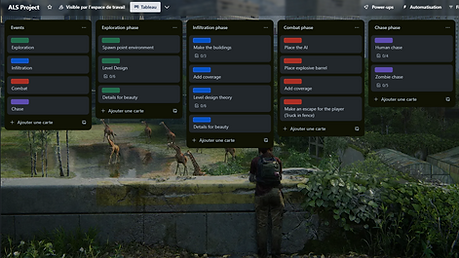
I used PureRef to organize visual references inspired by The Last of Us (overgrown outdoor environments) and The Walking Dead (enemy base and interiors). A 2D layout was kept alongside these references to maintain a clear overview of the level’s structure throughout production.
Tasks were organized by gameplay phases (exploration, stealth, combat, chase), with specific steps defined for each. This structure supported a clear production flow and ensured consistency throughout the level.
Paper Design to Final Level


Blockout Process


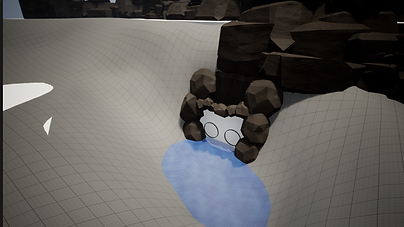
For the blockout phase, I approached it one step at a time, focusing on each gameplay phase individually. I conducted frequent playtests to determine what felt most engaging for the player. Throughout the process, I consistently aimed to integrate meaningful interactions, verticality, small puzzles, and other gameplay elements. My goal was to maintain strong cohesion between all parts of the level while also creating variety to keep the experience dynamic and interesting.


Walkthrough
1. Introduction of the Level
3. Infiltrate the territory
5. Find the key
2. Find the sewer
4. Find a way in the factory
6. Stole the medication
7. Fight the bad guys
8. Escape the enemy camp
9. Get rid of the rest of the enemies
10. Escape the deads
Each phase was designed with a clear intent. The level opens with exploration to introduce mechanics and context, then builds tension through stealth as the player avoids detection.
After completing the objective, intensity peaks in a fast-paced combat encounter, followed by a high-pressure chase that sustains tension until the end. The final zombie pursuit reinforces the post-apocalyptic tone and concludes with a clear objective: escape.
Level Design Techniques

Leading Lines
Purpose: Guide player movement and draw attention to key objectives without explicit prompts. This helps create a more intuitive experience and reduces the need for intrusive UI elements.
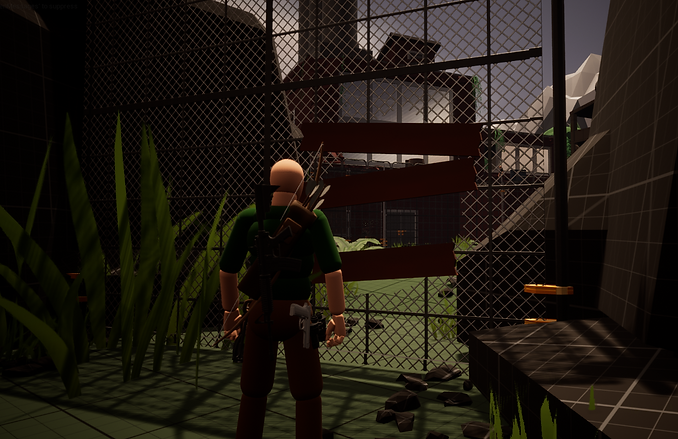
Application: Wooden planks subtly direct the player toward the infirmary.
Backgate
Purpose: Control player progression by subtly restricting movement within a non-linear space. This helps maintain pacing and ensures players follow the intended path without feeling constrained.
Application: Backgates are placed throughout the level to guide exploration and limit backtracking while preserving a sense of freedom.

Reveal
Purpose: Highlight key visual elements to prepare players for upcoming gameplay. This builds anticipation and helps establish clear expectations about future objectives and spaces.
Application: Two early vantage points reveal the enemy base, reinforcing the objective.
Landmarks
Purpose: Draw player attention to key locations and support navigation. This helps players build a mental map and stay oriented during exploration.
Application: Landmarks are placed to guide exploration and reinforce the player’s path.


Softgate
Purpose: Delay player progression through light challenges. This helps control pacing and adds small objectives that structure the experience.
Application: A locked door blocks access to the medication, requiring the player to find a key before progressing.
Vantage Point
Purpose: Provide an overview of the environment to support player planning. This reinforces spatial awareness and helps anticipate upcoming encounters.
Application: An elevated viewpoint during infiltration lets players survey the enemy camp before engaging.


Colors & Shapes
Purpose: Use visual contrast to guide attention and navigation. This helps highlight key elements without relying on explicit markers.
Application: Plants and blood traces lead toward an open window, signaling the intended exit.
Movement
Purpose: Use dynamic elements to attract attention and guide player direction. This reinforces navigation through natural, readable cues.
Application: A crawling zombie draws the player’s eye toward the intended path.

Full Playthrough
Closing Thoughts
This was my first major solo level design project, and it helped me better understand my creative process and how I like to structure my workflow. I also gained confidence in applying level design principles with clearer intent throughout the experience.
Over the course of the project, I became more comfortable with Unreal Engine 5, especially using Level Sequencer and scripting tools. Working within a three-week timeframe and integrating feedback helped me iterate faster and grow as a designer.