Gabrielle Desrochers
Level Designer
Maestro
First Person Roguelike
Introduction
Project details
Maestro is a fast-paced first-person roguelite set in a mysterious casino where players fight through combat rooms using card-based weapons, abilities, and upgrades to create powerful builds. Each run focuses on fast combat, strategic choices, and progression across multiple floors with unique enemies and bosses.
On this project, I focused on structuring gameplay spaces and guiding players through combat encounters, supported by carefully designed level sequences to maintain clear pacing and flow.
-
Developed in 4 months
-
Unreal Engine 5
-
Level Design
-
Blockout
-
Gameplay space layout
-
Enemy encounter placement
-
Level sequences for pacing and progression
-
Environmental Mechanics Implementation
-
Assets use:


Moodboard for each floor
Pre-Production
During pre-production, the team and I organized tasks using Trello and established the project’s core direction through a Game Design Document (GDD). I gathered visual references and developed 2D level layouts to explore the structure and gameplay flow before moving into the blockout phase.

Team's Trello

Moodboard for each floor

GDD
Paper Design


Blockout Process

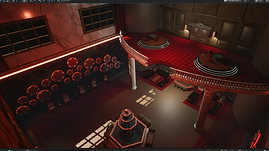


During the blockout phase, combat spaces were designed around the enemy count and wave structure of each encounter. I explored varied layouts and verticality to support fluid player movement and create more dynamic combat scenarios, helping prevent encounters from feeling repetitive.
Walkthrough
1. Room Entry
-
Clear entry framing
-
Immediate threat readability
-
Open sightlines
4. Player Choice
-
Two reward paths
-
Build-defining decisions
-
Risk vs reward
2. Combat Encounter Design
-
Scaled to enemy count & waves
-
Supports movement & repositioning
-
Dynamic combat space
5. Progression & Build Evolution
-
Cards / abilities / upgrades
-
Build evolution
-
Run adaptation
3. Layout Variety
-
Varied layouts
-
Vertical gameplay
-
Non-repetitive encounters
6. Shop & Risk/Reward System
-
Cards and abilities management
-
Blackjack risk system
-
Strategic upgrades
7. Boss Encounter
-
Difficulty spike
-
Build validation
-
Skill test
8. Replayability & Loop
-
Run reset
-
Persistent currency
-
Build experimentation
Level Design Techniques
Player Guidance
Purpose: Help players navigate the space intuitively.
Application: Use layout, sightlines, and visual cues to direct movement.
Combat Space Design
Purpose: Support engaging and readable combat encounters.
Application: Scale spaces based on enemy count and allow for movement and repositioning.
Pacing & Intensity
Purpose: Maintain a balanced gameplay rhythm.
Application: Alternate between high-intensity combat and lower-pressure moments.
Risk vs Reward
Purpose: Encourage meaningful player decisions.
Application: Offer choices between rewards that impact build and progression.
Readability
Purpose: Ensure players quickly understand the situation.
Application: Keep spaces clear with visible threats and readable layouts.
Environmental Affordance
Purpose: Communicate possible player actions through the environment.
Application: Use level elements to suggest movement, cover, or interaction opportunities.
Flow & Navigation
Purpose: Create smooth and natural player movement.
Application: Design clear paths and avoid unnecessary friction in traversal.
Replayability through Variation
Purpose: Keep the experience fresh across multiple runs.
Application: Use varied layouts and procedural room selection.
Maestro accessible on Steam

Closing Thoughts
This project helped me improve my skills in combat space design, player guidance, and pacing within a roguelite structure. It strengthened my understanding of player flow and decision-making, and how to create clear and engaging gameplay spaces.